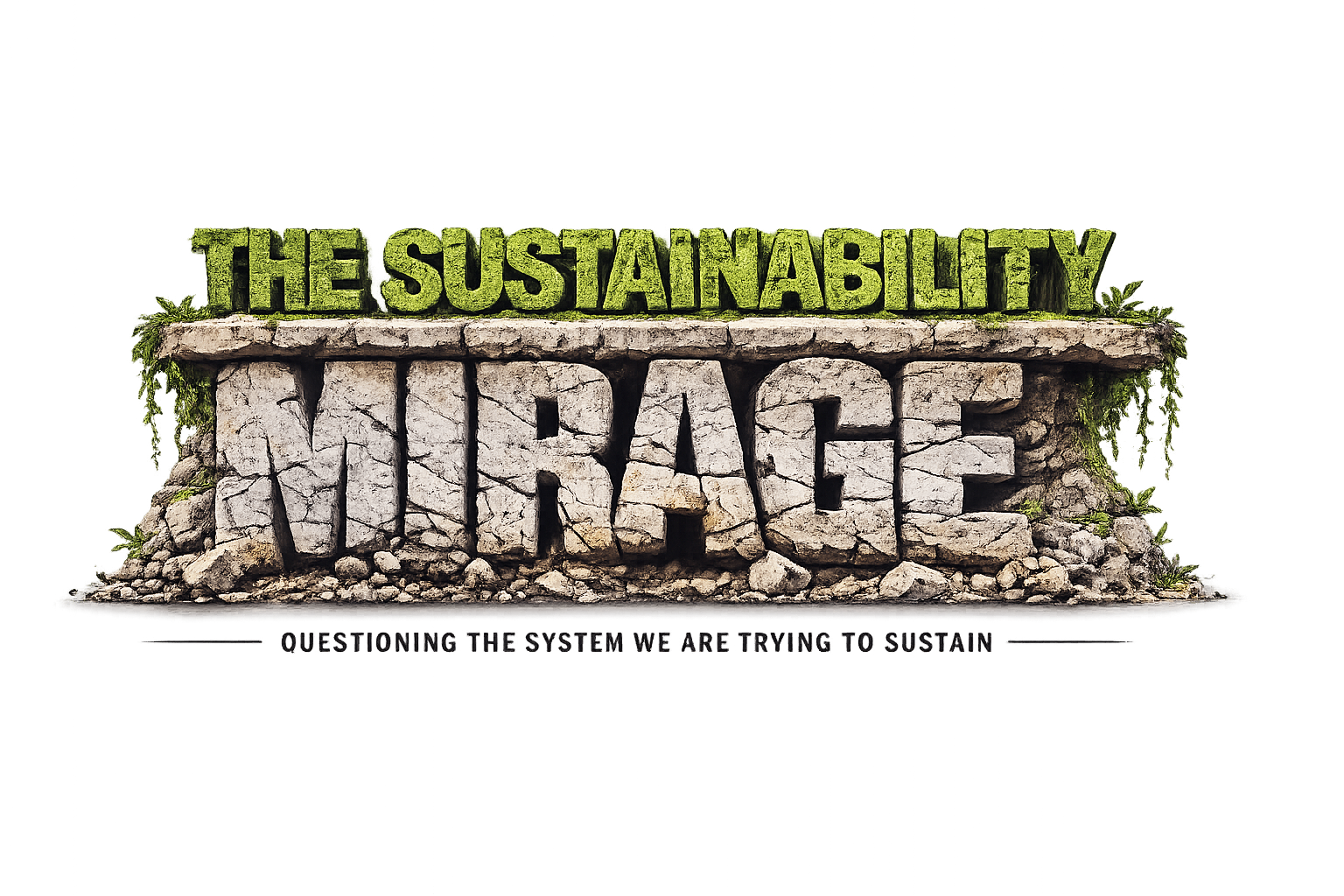
For more than half a century, sustainability has become one of the defining ideas of our time. Governments pursue it. Corporations report on it. Investors measure it. Universities teach it. NGOs advocate for it. International institutions promote it. Few concepts enjoy such broad support.
The ambition is difficult to oppose. A sustainable world should be more equitable, more peaceful, and more respectful of both people and the environment. Most of us would agree.
Yet despite decades of effort, many of the trends sustainability was meant to address continue to move in the wrong direction. Resource extraction continues to expand. Material consumption continues to grow. Waste generation continues to increase. Ecosystems continue to degrade. Inequalities continue to widen.
The usual explanation is that we need more. More information. Better regulations. Improved technologies. Stronger commitments. Greater transparency. Perhaps.
But after spending much of my professional life working in sustainability, international development, entrepreneurship, and global supply chains, I eventually found myself asking a different question. Not how sustainability can be improved. Not which solution should be prioritized. But something more fundamental.
What system are we trying to sustain?
The question may seem obvious. Yet it is rarely discussed directly. Much of the sustainability conversation focuses on outcomes. We talk about the world we would like to create but spend less time discussing the system that must produce those outcomes.
The distinction matters. A system can survive for a very long time without producing outcomes we consider desirable. History provides many examples. Likewise, a system can produce desirable outcomes for a period of time while relying on conditions that cannot be maintained indefinitely. The challenge is not simply to define a sustainable future. The challenge is to understand whether the structures that shape our decisions can produce it.
Over the years, I worked with governments, NGOs, investors, multinational corporations, development organizations, producers, and communities across four continents. The contexts were different. The cultures were different. The priorities were different.
Yet a similar pattern appeared again and again. Problems were identified. Data improved. New standards emerged. Reporting expanded. Additional resources were deployed. Adjustments were made. But the underlying dynamics often remained surprisingly stable.
At some point, the question changed. The issue was no longer whether people cared. Most did. The issue was no longer whether solutions existed. Many did. The question became whether the system itself was capable of moving in the direction sustainability required.
That is not the same question. Nor does it necessarily lead to the same answers.
This essay does not attempt to answer it. It simply proposes that before discussing what a sustainable future should look like, we should first be clear about what we are trying to sustain.
The answer may shape every other conversation that follows.
Download
Download PDFContinue Reading
Back to all essaysJoin the Conversation
Receive new essays as they are published.
Become a Founding Reader to follow this ongoing inquiry into sustainability, economic systems, and the questions that deserve continued examination.
Become a Founding Reader